
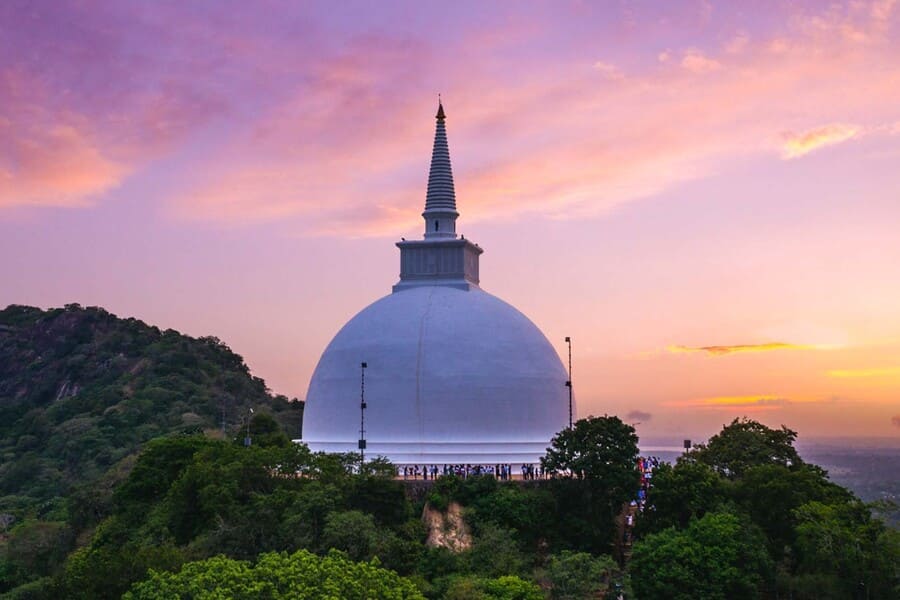
Few places on earth carry the weight of history quite like Anuradhapura. Nestled in the heart of Sri Lanka's North Central Province, this sacred city has been a center of spiritual life, royal power, and architectural achievement for more than two millennia. Whether you are exploring the island independently or joining one of the many sri lanka local tours that sweep through the Cultural Triangle, a visit to Anuradhapura is an encounter with one of Asia's most profound and well-preserved ancient civilizations. This guide covers everything you need to know before you go, from the top attractions and best activities to practical travel tips and frequently asked questions.
What Is Anuradhapura?
Anuradhapura is one of the oldest continuously inhabited cities in the world and one of the ancient capitals of Sri Lanka. Founded in the 4th century BCE, it served as the political and religious capital of the island for over a thousand years, nurturing a sophisticated Buddhist civilization that left behind an extraordinary legacy of stupas, monasteries, palaces, and sacred trees.
Today, the ruins of this once-great city are protected as a sacred city and archaeological reserve, drawing scholars, pilgrims, and travelers from across the globe. Walking through its grounds, you will find colossal dagobas (dome-shaped Buddhist shrines) rising above the jungle canopy, ancient ponds reflecting centuries-old stone carvings, and sacred sites that remain actively worshipped to this day.
Where Is Anuradhapura in Sri Lanka?
Anuradhapura in Sri Lanka is located in the North Central Province, approximately 205 kilometers north of Colombo. It sits within what is commonly known as the Cultural Triangle, a region that also encompasses Sigiriya, Polonnaruwa, and Dambulla. The city of Anuradhapura is accessible by road, rail, and bus from most major destinations on the island, making it a logical stop for anyone touring the country's interior.
Why Is the City of Anuradhapura a UNESCO World Heritage Site?
UNESCO inscribed Anuradhapura on the World Heritage List in 1982, recognizing the site as an outstanding example of ancient urban planning, religious architecture, and hydraulic engineering. The city of Anuradhapura represents the first great kingdom of Sri Lanka and played a pivotal role in the spread of Theravada Buddhism across South and Southeast Asia.
The site contains eight of the most sacred places in the Buddhist world, known collectively as the Atamasthana, and features some of the earliest examples of architectural innovation in the region. The ancient irrigation systems built by Anuradhapura's kings to sustain agriculture across the dry zone of Sri Lanka are considered engineering marvels that modern researchers continue to study. This combination of cultural significance, religious heritage, and historical depth is what makes Anuradhapura Sri Lanka a destination unlike any other.
Top Attractions in Anuradhapura
Sri Maha Bodhi
The Sri Maha Bodhi is arguably the most sacred site in Anuradhapura and one of the most revered in the entire Buddhist world. This sacred fig tree is believed to have been grown from a cutting of the original Bodhi tree in Bodh Gaya, India, under which the Buddha attained enlightenment. Brought to Sri Lanka in 288 BCE by Sanghamitta Theri, the daughter of Emperor Ashoka, the tree has been tended and protected for over 2,300 years, making it the oldest historically documented tree in the world.
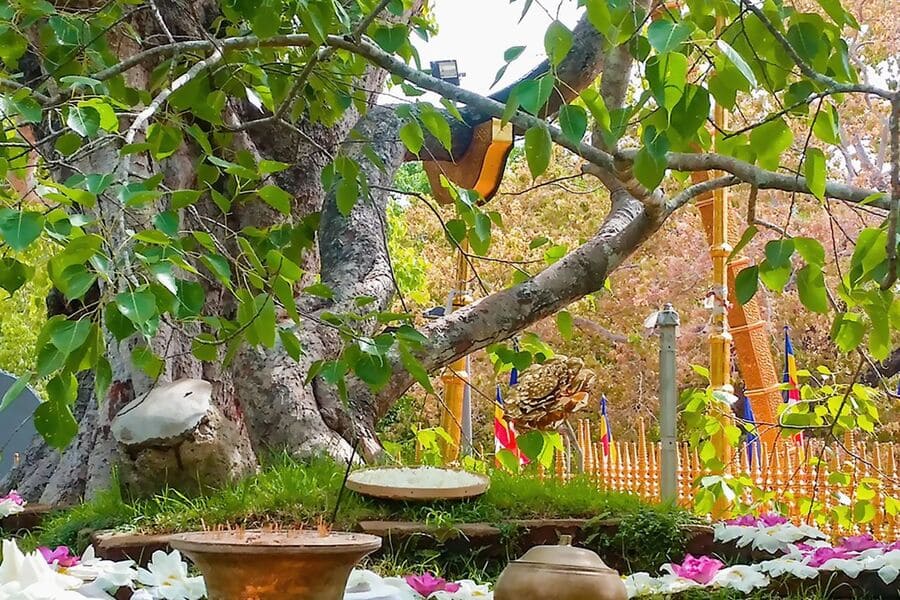
Pilgrims clad in white arrive daily to offer flowers, light oil lamps, and pray beneath its golden-barred enclosure. The atmosphere is deeply moving, and visiting during a poya (full moon) day, when crowds of devotees gather, is a genuinely unforgettable experience.
Ruwanwelisaya Stupa
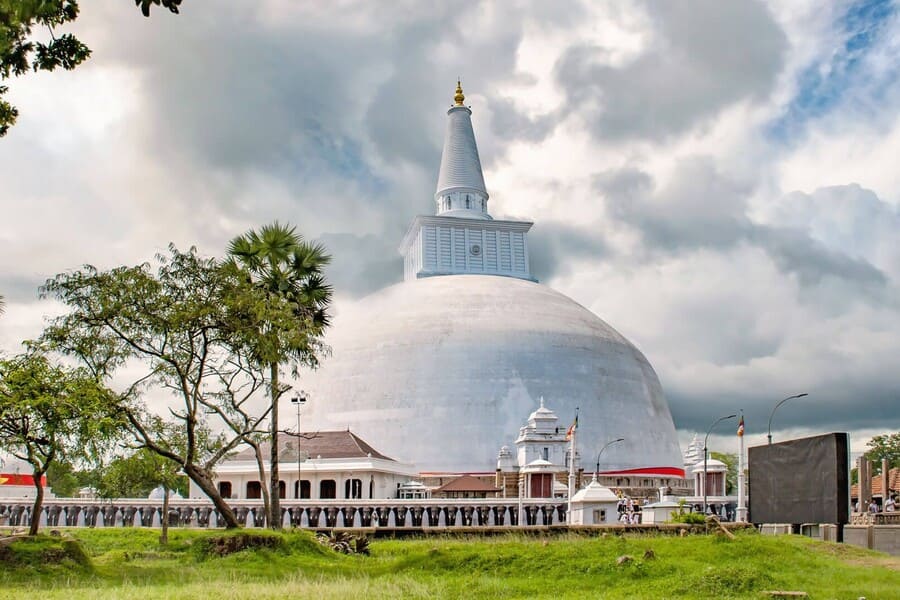
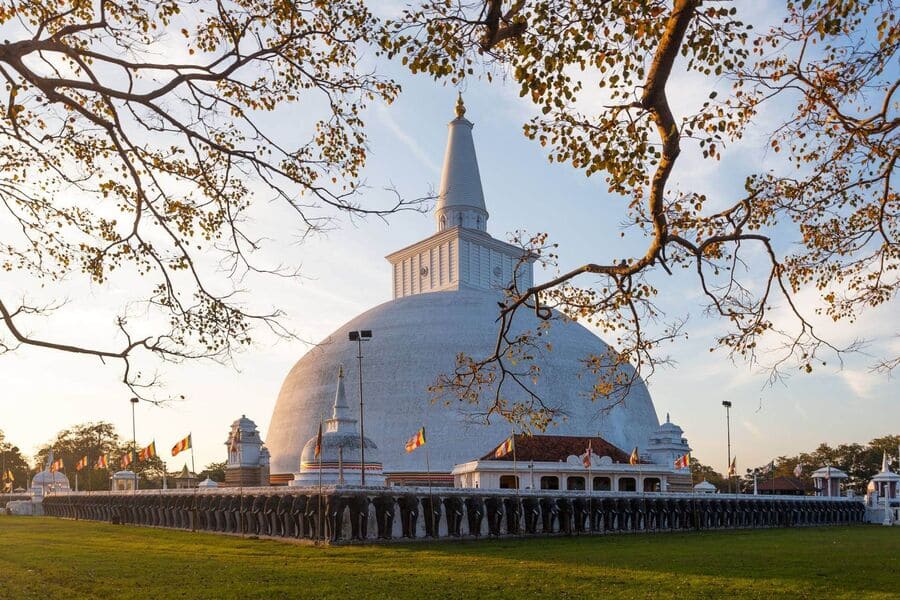
Rising to a height of over 103 meters, the Ruwanwelisaya Stupa is one of the most iconic structures in Anuradhapura Sri Lanka. Built by King Dutugemunu in the 2nd century BCE, this gleaming white dagoba is surrounded by a procession of stone elephants that encircle its base, a detail that never fails to impress first-time visitors.
The stupa has been restored numerous times over the centuries, and its immaculate whitewashed surface now gleams brilliantly in the tropical sun. Devotees circumambulate the structure clockwise, and the air around it is thick with the scent of incense and the sound of chanting monks.
Jetavanaramaya
Once the tallest structure in the ancient world outside of Egypt, the Jetavanaramaya Dagoba is a testament to the ambition of Anuradhapura's ancient builders. Constructed during the reign of King Mahasena in the 3rd century CE, the dagoba originally soared to around 122 meters, requiring an estimated 93 million baked bricks to complete.
Today it stands at about 71 meters, its brickwork partially exposed and surrounded by the ruins of the vast monastery complex that once housed thousands of monks. The adjacent museum provides helpful context, displaying artifacts recovered during excavations including gold jewelry, gems, and ritual objects.
Thuparamaya
As the first dagoba ever built in Sri Lanka, the Thuparamaya holds a special place in the history of Anuradhapura. Erected by King Devanampiya Tissa in the 3rd century BCE to enshrine a collarbone relic of the Buddha, it stands as the beginning of a long tradition of sacred architecture on the island.
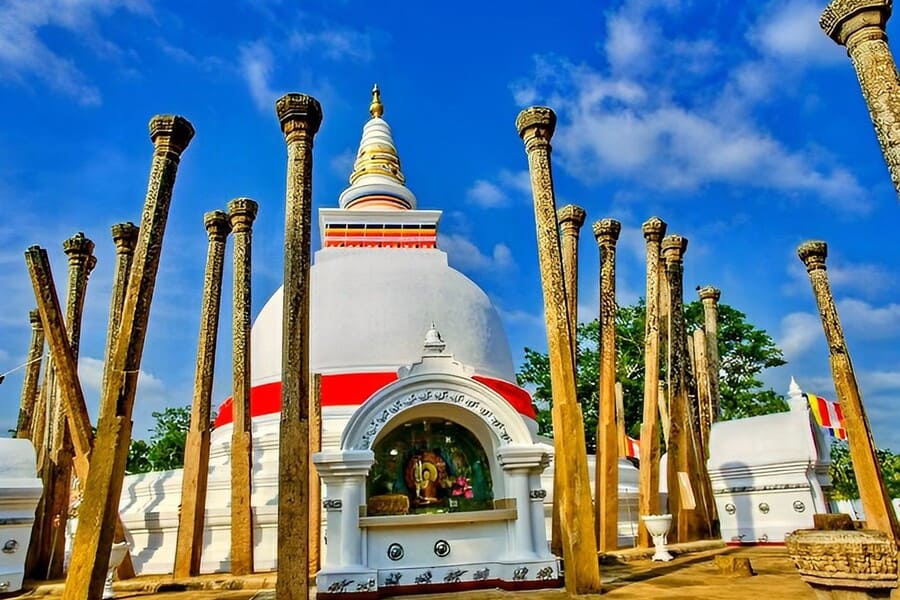
The stupa is surrounded by rows of slender granite pillars, the remnants of a vatadage (circular relic house) that once sheltered it. The setting is serene and often less crowded than other major sites, making it a good place for quiet reflection.
Abhayagiri Monastery
The Abhayagiri Monastery complex was once one of the largest monastic universities in Asia, home to thousands of monks and scholars who studied not only Buddhism but also medicine, astronomy, and philosophy. Established in the 1st century BCE, it grew over centuries into a sprawling complex that rivaled the great learning centers of ancient India.
The central Abhayagiri Dagoba rises to about 75 meters and is surrounded by the ruins of chapter houses, meditation halls, refectories, and bathing pools. The moonstone (sandakada pahana) carvings at the entrances of some structures here are among the finest examples of ancient Sri Lankan sculpture.
Isurumuniya Temple
Carved directly into a granite outcrop beside a peaceful tank, the Isurumuniya Temple is one of the most atmospheric sites in Anuradhapura city. Built during the reign of King Devanampiya Tissa, the temple is perhaps best known for its collection of stone carvings, the most celebrated of which is the "Lovers" panel, believed by some to depict the mythological figures of Saliya and Asokamala.
The site's natural setting, with black rocks tumbling into a lotus pond and elephants once bathing nearby, gives it a romantic and contemplative quality that lingers long after you leave.
Samadhi Buddha Statue
Considered one of the finest examples of ancient Buddhist sculpture in Sri Lanka, the Samadhi Buddha Statue depicts the Buddha in a serene meditative posture. Dating to around the 4th century CE, the statue is carved from limestone and still conveys a remarkable sense of calm and spiritual presence.
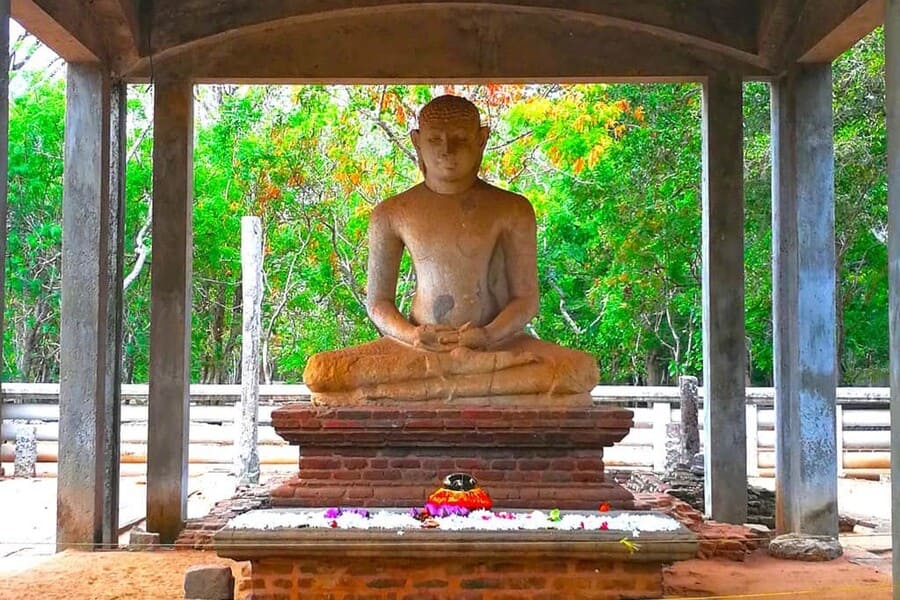
It is said that Jawaharlal Nehru, India's first Prime Minister, found solace in a photograph of this statue during his years of imprisonment by the British, a story that underscores the power this image has carried across generations and cultures.
Twin Ponds (Kuttam Pokuna)
The Twin Ponds, or Kuttam Pokuna, are a pair of ancient bathing pools that once served the monks of the Abhayagiri Monastery complex. Constructed with impressive precision, they demonstrate the advanced knowledge of hydraulic engineering that characterized the city of Anuradhapura at its peak.
The ponds are connected by an underground pipe system and feature decorative stone makara (mythological sea creature) heads through which water once flowed. Even in their current state, the symmetry and craftsmanship of these structures are genuinely impressive.
Best Things to Do in Anuradhapura
Cycle Around the Ancient City
The most popular and practical way to explore Anuradhapura is by bicycle. Rental shops near the bus and train stations offer bikes at low daily rates, and the flat terrain makes cycling comfortable even in the heat of the morning. The ancient sites are spread over a wide area, and cycling allows you to move between them at your own pace, stopping whenever something catches your eye.
The experience of pedaling along quiet roads through ruins half-swallowed by jungle, with monkeys leaping between temple trees and peacocks strutting beside ancient tanks, is one of the most memorable things you can do in Sri Lanka.
Visit Sacred Temples and Monasteries
Anuradhapura remains an actively sacred city, and many of its sites are functioning places of worship rather than mere archaeological exhibits. Visitors are welcome at temples and stupas but should dress respectfully, covering shoulders and knees, and remove footwear before entering sacred areas.
Take time to observe the rituals happening around you: monks chanting in candlelit shrines, pilgrims laying flowers at the feet of ancient statues, families gathered in prayer at the base of enormous dagobas. These moments of living faith within the ruins give the city a spiritual depth that photographs alone cannot capture.
Watch the Sunset Over Ancient Ruins
As the heat of the day softens and the golden light of late afternoon falls across the stupas, Anuradhapura transforms into something truly magical. Head to the elevated ground near the Jetavanaramaya or find a quiet spot beside one of the ancient tanks to watch the sun sink behind the tree line, painting the brickwork in shades of orange and rose.
The evenings are also cooler and more comfortable for walking, and the sites feel more contemplative when the largest tour groups have departed.
Learn About Sri Lanka's Ancient Civilization
The Archaeological Museum in the new town of Anuradhapura provides an excellent overview of the city's history, with artifacts spanning centuries of royal patronage, monastic life, and artistic achievement. Knowledgeable local guides are available at the entrance to the sacred city and can bring the ruins to life with stories, historical context, and local lore that you simply will not find in a guidebook.
Best Time to Visit Anuradhapura in Sri Lanka
The best time to visit Anuradhapura Sri Lanka is between May and August, when the North Central Province enjoys relatively dry weather under the influence of the southwest monsoon that brings rain to the southern and western coasts. December through March also offers comfortable, drier conditions at the site.
The wettest months tend to be October and November, when the northeast monsoon brings heavier rainfall to this part of the island. Visiting during a poya day, which falls on every full moon, will reward you with an atmosphere of heightened devotion and ceremony, particularly at the Sri Maha Bodhi. However, these days are also the busiest, so arriving early in the morning is advisable.
How to Get to Anuradhapura
From Colombo
The most comfortable option from Colombo is the train. Several daily intercity express trains run from Colombo Fort Station to Anuradhapura, covering the journey in approximately three and a half to four hours. Air-conditioned first-class and second-class carriages are available, and tickets should be booked in advance through the Sri Lanka Railways website or at the station counter.
Buses from Colombo Central Bus Stand also run frequently and are cheaper, though the journey can take four to five hours depending on traffic. Private taxis and hired cars offer the most flexibility and are a good option if you are traveling with a group or heavy luggage.
From Sigiriya
Sigiriya lies roughly 70 kilometers southeast of Anuradhapura, making it an easy half-day journey. The most practical option is a private car or tuk-tuk, which can cover the route in about an hour and a half depending on the road conditions. Buses between Sigiriya and Habarana connect to services heading north toward Anuradhapura, though this route involves at least one transfer and is more time-consuming.
From Kandy
Kandy is located approximately 180 kilometers south of Anuradhapura, and the journey by train takes around three to four hours on the scenic route through the central highlands and down into the north central plains. Buses are available but typically take longer due to the winding roads through hilly terrain. A private vehicle remains the most flexible option, allowing stops at sites like Dambulla Cave Temple along the way.
Frequently Asked Questions About Anuradhapura
How many days should I spend in Anuradhapura?
Most travelers find that two days is the ideal amount of time to explore Anuradhapura comfortably. The first day can be devoted to the major sacred sites such as Sri Maha Bodhi, Ruwanwelisaya, and Jetavanaramaya, while the second day allows for a more leisurely exploration of the monasteries, smaller temples, and the archaeological museum. One night's stay also gives you the opportunity to experience the city during the magical golden hour of evening, when the dagobas glow in the fading light.
Is Anuradhapura worth visiting?
Absolutely. Anuradhapura is one of the most extraordinary archaeological sites in Asia and represents a chapter of human history that is rarely given the attention it deserves on the international travel circuit. The scale of the ruins, the continuity of living religious practice within the ancient city, and the sheer depth of history on display here make it a deeply rewarding destination for curious travelers of all backgrounds.
Can you visit Anuradhapura in one day?
It is possible to cover the main highlights of Anuradhapura in a single full day if you start early and move efficiently, ideally by bicycle. A one-day visit should include Sri Maha Bodhi, Ruwanwelisaya Stupa, Thuparamaya, Jetavanaramaya, and the Isurumuniya Temple, with time for the Samadhi Buddha Statue and Twin Ponds if the pace allows. However, rushing through the site means missing the contemplative atmosphere that makes the city so special, so an overnight stay is strongly recommended if your schedule permits.
What is Anuradhapura famous for?
Anuradhapura is famous for being one of the oldest cities in the world, the ancient capital of Sri Lanka, and home to some of the most sacred Buddhist sites on earth. It is particularly renowned for the Sri Maha Bodhi, believed to be the world's oldest living tree with a documented history, and for its towering dagobas, which rank among the tallest ancient structures ever built. The city is also celebrated for its sophisticated hydraulic engineering and its role as a center of Theravada Buddhist learning.
Is Anuradhapura suitable for families?
Yes, Anuradhapura is very well suited to family travel. Children are welcome at all the major sites, and the experience of cycling between ancient ruins, spotting monkeys in temple trees, and watching elephants at nearby national parks creates the kind of memorable adventure that young travelers respond to enthusiastically. Families should bring sun protection, comfortable walking shoes, and plenty of water, and plan to visit the most exposed sites in the cooler hours of the morning.